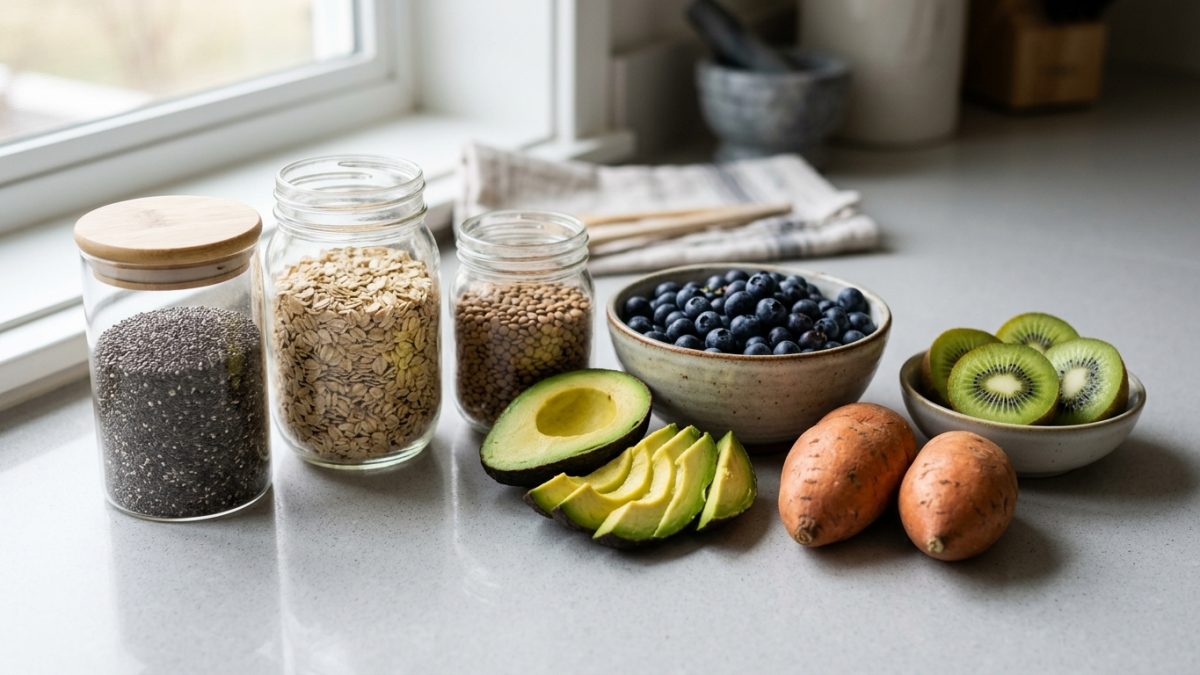
According to nutritional surveillance data across the United States and the United Kingdom, over 90% of adults fall significantly short of the daily dietary fiber guidelines. While clinical recommendations suggest 28g to 35g daily for optimal metabolic and cardiovascular wellness, the average adult consumes barely 14g.
The solution is not chalky fiber supplements or extreme dietary overhauls. By understanding the distinction between soluble and insoluble fibers—and introducing nutrient-dense whole foods progressively—you can hit 35g daily with zero digestive distress and sustained satiety.
Soluble vs. Insoluble Fiber: Why Both Matter
Dietary fiber is not an inert filler; it is the primary fuel for your gut microbiome. To optimize digestion and avoid post-meal sluggishness, a balanced nutrition protocol incorporates both major forms:
- Soluble Fiber: Dissolves in gastrointestinal water to form a gentle gel-like matrix. It slows carbohydrate absorption, blunts postprandial glucose surges, and feeds beneficial Bifidobacteria in the colon. Found abundantly in chia seeds, oats, black beans, and peeled apples.
- Insoluble Fiber: Remains intact through transit, providing mechanical bulk and supporting regular gut peristalsis. Found in leafy greens, seeds, legume skins, and whole ancient grains.
The 10 High-Fiber Staples to Add to Your Weekly Cart
| Whole Food | Standard Serving | Dietary Fiber (g) | Primary Fiber Type | Zero-Effort Meal Prep Addition |
|---|---|---|---|---|
| Chia Seeds | 2 tablespoons (28g) | 10.0g | Soluble (Mucilage) | Stir into overnight oats or morning Greek yogurt |
| Cooked Black Beans | 1 cup (172g) | 15.0g | Soluble & Resistant Starch | Toss into grain bowls or blend into warming broths |
| Fresh Raspberries | 1 cup (123g) | 8.0g | Insoluble & Pectin | Fresh topping on morning porridge or cottage cheese |
| Brown Lentils (Cooked) | 1 cup (198g) | 15.6g | Prebiotic Soluble | Batch cook on Sunday as a savory lunch base |
| Avocado | 1 medium fruit (150g) | 10.0g | 70% Insoluble / 30% Soluble | Slice alongside pasture-raised eggs or roasted veggies |
| Rolled Oats | 1/2 cup dry (40g) | 4.0g | Beta-Glucan (Soluble) | Simmer with ground cinnamon and unsweetened almond milk |
| Edamame (In Pod) | 1 cup cooked (155g) | 8.1g | Balanced | Steam with coarse sea salt flakes for a 5-minute snack |
| Artichoke Hearts | 1 cup cooked (168g) | 9.6g | Inulin (Prebiotic) | Roast with extra virgin olive oil and crushed garlic |
| Flaxseed (Cold Ground) | 2 tablespoons (14g) | 3.8g | Lignans & Soluble | Whisk into vinaigrettes or bake into rustic bread |
| Brussels Sprouts | 1 cup halved (88g) | 4.1g | Insoluble Cellulose | Shred raw for a crunchy winter slaw |
What a 35g Fiber Day Looks Like in Practice
You do not need to graze on raw broccoli all day to meet your metabolic fiber goals. Here is an example of an effortless, delicious 35g fiber daily schedule:
- Morning (14g Fiber): Warm rolled oats with 2 tbsp chia seeds, a handful of fresh raspberries, and a scoop of unflavored whey or collagen peptides.
- Midday Lunch (12g Fiber): Mediterranean harvest bowl: 1/2 cup warm brown lentils, 1/2 diced avocado, massaged kale, roasted cherry tomatoes, and a tahini lemon drizzle.
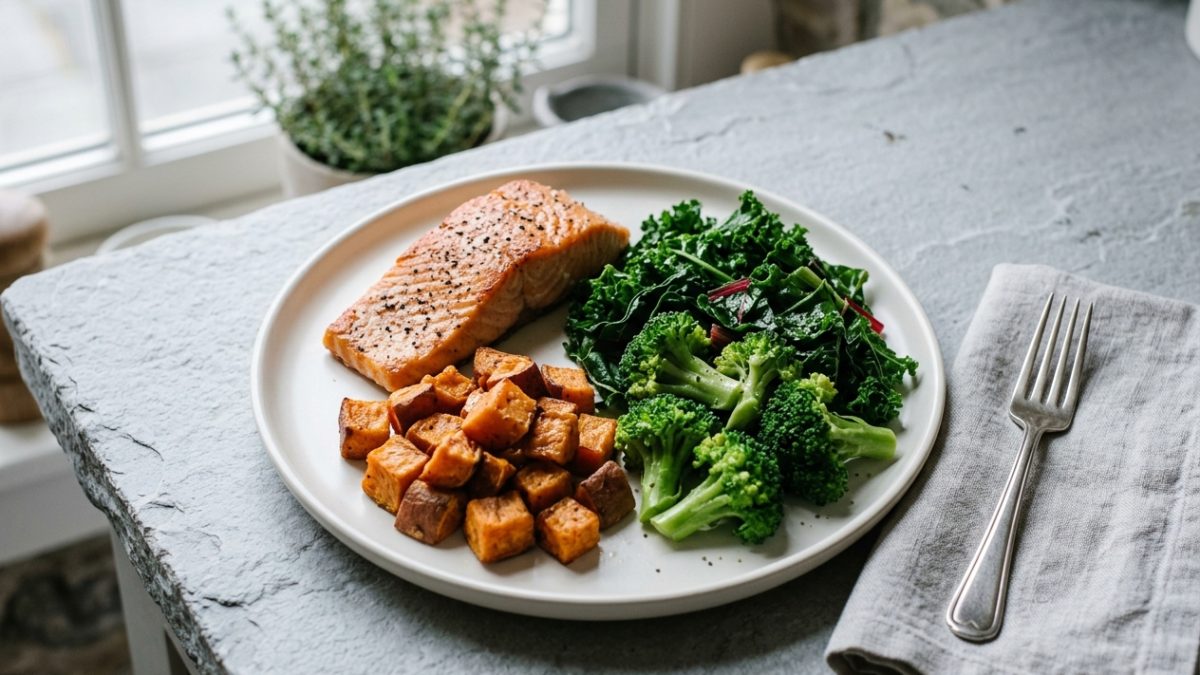
- Evening Dinner (10g Fiber): Baked wild salmon over 1/2 cup black beans and roasted Brussels sprouts tossed with cold-pressed olive oil.
- Total Daily Fiber: 36.0 grams
📌 Save This Guide for Later
Save the 35g Fiber Checklist to Pinterest
Tap the Pinterest Save button on your screen to pin our grocery comparison chart directly to your Healthy Meal Prep or Gut Health board.
Two Essential Rules to Prevent Bloating
If you currently consume 12–15g of fiber per day, do not jump to 35g overnight. The microbial ecosystem in your gut requires progressive adaptation to upregulate fermentation enzymes.
Rule 1: The 5-Gram Ramp Rule. Increase your fiber intake by roughly 5 grams every three to four days. Allow your digestion to stabilize before adding additional legumes or seeds.
Rule 2: Prioritize Hydration. Fiber without adequate water creates internal friction. Drink an additional 8–10 oz glass of water for every 5g increase in daily fiber.


Leave a Reply